Somewhere in the last two years, the rules changed. The videos that perform best on social feeds, the ones that get watched and shared and acted on, don't look like they were made by a production company. They look like someone pulled out their phone and hit record.
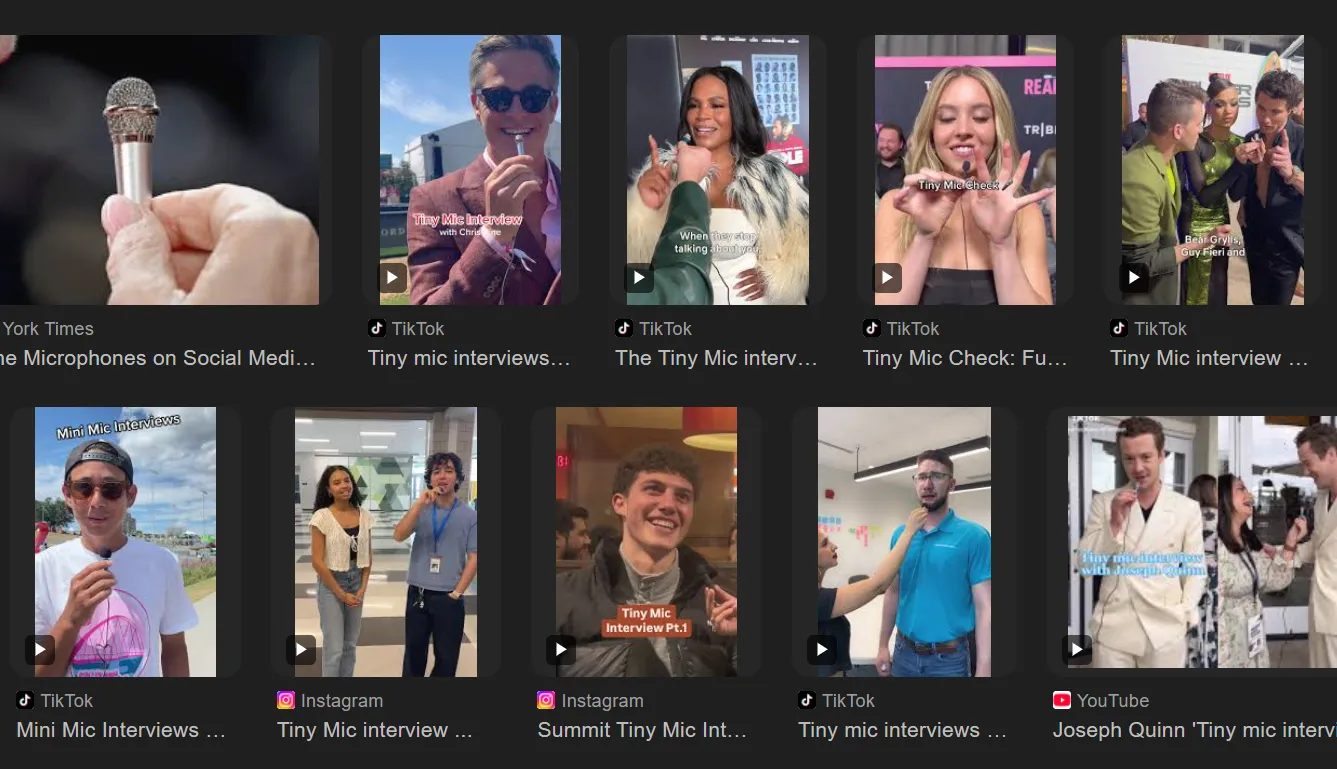
Tiny mic interviews. Portrait-mode footage. Unscripted reactions. Customer selfie-style testimonials. This isn't a trend that's going to pass. It's a fundamental shift in what audiences interpret as trustworthy. And it has real implications for how B2B and B2C brands should be thinking about video production in 2026.
The Trust Equation Has Flipped
For years, high production value was a signal of credibility. If a video looked expensive, the thinking went, the company behind it must be legitimate. Lighting, color grading, smooth camera moves, professional voiceover, all of it said we're serious.
That signal still works in certain contexts. But for a growing segment of consumers, especially younger audiences who grew up on YouTube, TikTok, and Instagram, polish has become a signal of something else entirely: advertising. And advertising is the thing they've trained themselves to scroll past.
What reads as trustworthy now is content that looks like it came from a real person, not a brand. When someone holds a lavalier mic up to their face on the street, or when a customer shows a product on a webcam, or when a founder shoots a take in their car, that reads as unfiltered. It reads as honest. And honest is what converts.
What "Creator-Style" Looks Like in Practice
You've probably seen this aesthetic everywhere by now, even if you haven't put a name on it. Here's what defines it:
- Tiny mic interviews. A handheld lavalier microphone held up to someone's face, man-on-the-street style. The mic itself is part of the visual language, signaling spontaneity.
- Phone-first framing. Shot in portrait orientation, or made to look like it was. Some productions use cinema cameras like C500s and Venice 2s and shoot vertically to mimic phone footage while keeping higher image quality.
- Minimal post-production. Quick cuts, simple text overlays, no fancy transitions. The edit should feel fast and casual, not labored over.
- Real people, not actors. Employees, customers, founders. The less "cast" a video feels, the better it performs.
The irony is that producing content that looks effortless takes planning. The best creator-style content is still scripted, scheduled, and shot with intention. The difference is that the output doesn't advertise that effort. Go too far in the other direction, though, and you end up like McDonald's.
Their CEO Chris Kempczinski just posted a video on Instagram promoting the new Big Arch burger, with the idea being a casual, relatable taste test on camera. Instead, he repeatedly called the burger a "product," took the smallest possible bite, and narrated the ingredients like he was reading off a spec sheet. Social media shredded it. Viewers joked he looked like someone encountering fast food for the first time. It was clearly planned, and it looked clearly planned. The worst of both worlds.
Burger King's U.S. president Tom Curtis responded days later on TikTok. He took a massive bite of the revamped Whopper in front of a grill, nodded, and said the only thing missing was a napkin. The caption: "Thought we'd replay this." Audiences loved it. But here's the thing, that video was every bit as planned as the McDonald's one. They had him in front of a grill. They probably had multiple burgers ready for multiple takes. The framing, the caption, the timing, all strategic. But the output felt natural. Curtis looked like a guy who genuinely enjoys eating burgers.
That's the line you're trying to walk with creator-style content. Plan meticulously, but never let the machinery show.
Why This Works: The Psychology of Authenticity
People don't go to company websites for product recommendations anymore, at least not first. They go to YouTube creators, TikTok influencers, Reddit threads, and Instagram reviews. The common thread across all of those sources is that they feel independent, even when they're not.
When a consumer sees a polished brand video, their guard goes up. They know they're being marketed to. But when they see a customer holding their phone and talking about why they like a product, the psychological framing shifts. It feels like a recommendation from a peer, not a pitch from a company. That shift in framing is the entire ballgame.
This is especially powerful for testimonial-style content. A customer on a webcam talking about their experience with your software, in their own words, with their own lighting and their own background, that's going to outperform a cinematic interview setup for a lot of audiences. Not because the production is better, but because the perceived authenticity is higher.
The Playbook: More Content, Less Polish
If you're a marketing manager trying to figure out how to apply this, here's the practical shift: produce more content at a lower level of polish, and lean heavily into content that looks like your customer created it.
Remote Customer Testimonials
Instead of flying a crew to your customer's office, schedule a remote video call. Capture them on their webcam talking about your product. They show it, they demo it, they tell their story. These clips go into social feeds and into homepage carousels where visitors can scroll through five or six real customers speaking naturally.
The footage won't be cinematic. That's the point. It will look like a real person made it because a real person did.
Employee and Founder Content
Your team is a content engine waiting to be activated. A founder recording a two-minute take in their office about a product decision. An engineer walking through a feature on a screen share. A customer success manager sharing a quick tip. None of this requires a crew or a studio. It requires a plan and a phone.
Influencer and Micro-Creator Partnerships
This is the other lever. Find creators in your niche who already have the trust of your target audience and let them tell your story in their own format. The content they produce will outperform anything you could make in-house for that same audience, because the trust is already established.
You Still Need Brand Films. Here's Why.
Before you cancel your next production shoot, let's be clear: creator-style content doesn't replace professional brand films. It complements them.
Brand films serve a different function. They establish your visual identity, communicate your values, and set the tone for how the market perceives you. When a prospective enterprise client visits your website, they still expect a level of professionalism that a webcam testimonial doesn't provide. When you're pitching to investors, presenting at a conference, or launching a major initiative, polished production earns its place.
The right strategy is a two-track approach:
- Track one: brand films. High-quality, scripted, professionally produced content that represents your company at its best. These live on your website's hero sections, get shown in sales decks, and anchor your YouTube channel.
- Track two: creator-style content. High-volume, low-polish, authenticity-first content that feeds your social channels, populates testimonial carousels, and drives engagement in feeds where people scroll fast and trust slow.
The ratio will depend on your audience. If you're B2C or selling to younger demographics, lean heavier into track two. If you're selling enterprise software to CTOs, track one still carries more weight, but track two is increasingly how those CTOs discover you in the first place.
The B2B vs. B2C Split
This is an important nuance. Creator-style content is most effective in B2C and SMB-facing contexts where the buyer persona is comfortable with casual, social-first content. When your buyer is a consumer scrolling Instagram or a small business owner watching TikTok reviews, unpolished content wins.
In B2B contexts, especially when selling to senior decision-makers at larger organizations, the expectations shift. These buyers still value polish because it signals operational maturity and investment. A webcam testimonial might actually undercut your positioning with this audience.
The smart play is to know your personas and match the content style to how each one evaluates trust. Some buyers trust the founder-in-a-hoodie video. Others trust the cinematic brand story. The companies winning right now are producing both.
How Sandpiper Approaches This
At Sandpiper Video, we produce across both tracks. We do full-crew, on-location brand films and testimonial shoots with scripted interview frameworks, multi-variant edits for different buyer personas, and cinema-quality production.
We also help clients build out their creator-style content systems. That can look like setting up remote customer interview workflows where we capture webcam testimonials at scale, or building shot lists and scripts for founder and employee content that looks spontaneous but is strategically planned. The production process is organized and intentional. The output just doesn't look like it.
Because that's the real skill here, not making content that's unplanned, but making planned content that feels unplanned. That takes experience, and it takes understanding what audiences are responding to right now.