When people hear multi-camera event coverage, they sometimes picture a live broadcast. That's not what this is. This is capture. You're running an event, there are presentations, speakers, panels, Q and A, and the goal is to walk away with all of it recorded plus a pile of footage you can use long after the room empties.
Here's how we cover a presentation. We set up a two-camera shot, a tight angle on the speaker and a wide angle that takes in the stage and the audience. We help you get the audio and video sorted, the microphones, the feed from the presenter's computer so the slides are captured cleanly, and we record the whole thing. Keynotes, speeches, panels, the sessions you spent months organizing, all of it gets recorded properly instead of surviving as a shaky phone clip someone took from the third row.
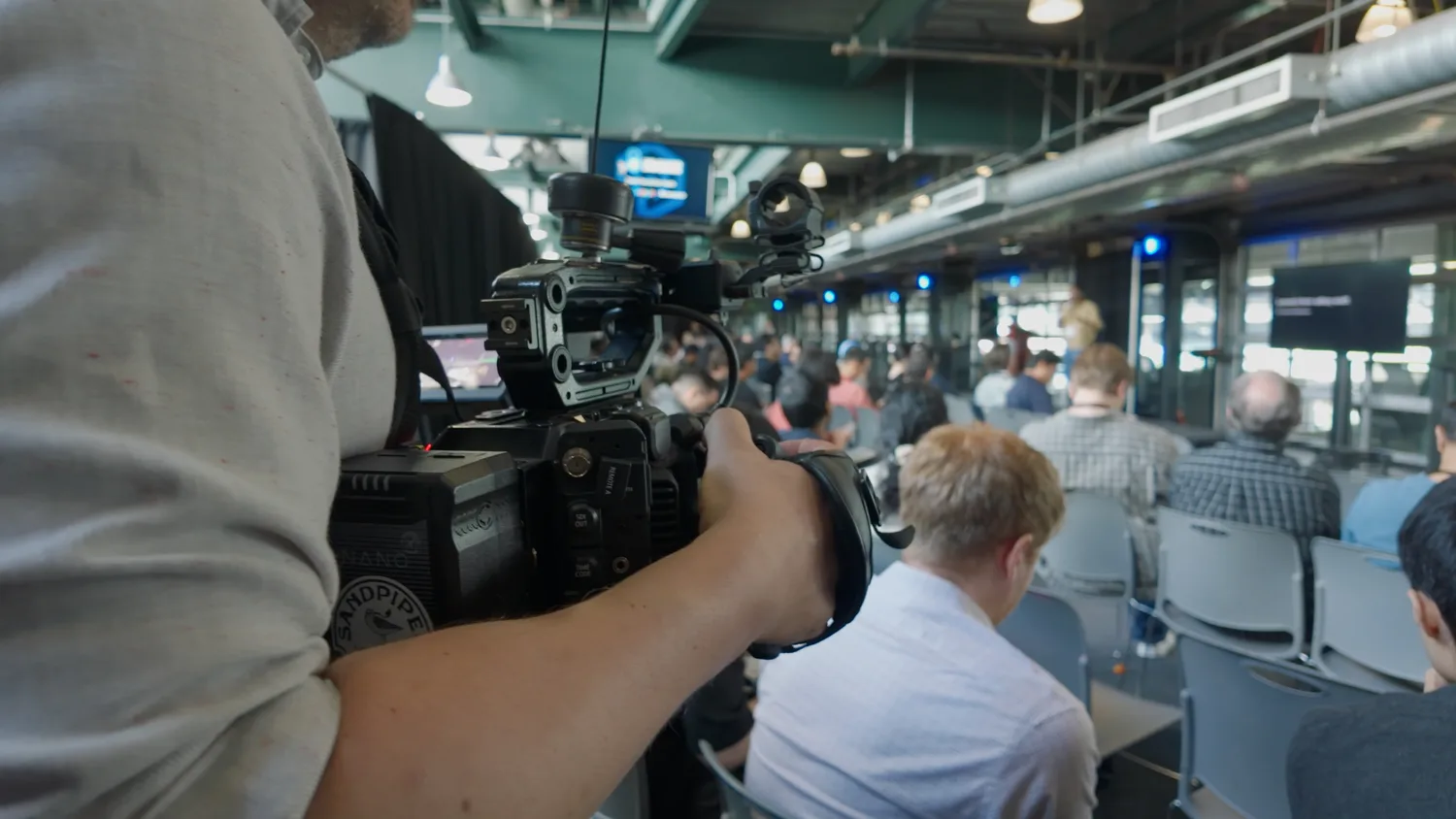
Then there's the third camera, the one that's moving. While the presentations are being captured by the tight and wide angles, we have someone roving the event getting B-roll, close-ups of people, the room filling in, attendees talking and laughing, the details. That footage is where a lot of the long-term value sits. It's what becomes a sizzle reel or an ad to promote next year's event. You've seen those highlight videos that make a conference look worth attending. This is the footage they're built from, and you can't go back and shoot it once the event is over.
Lately we've started setting aside a room at these events to interview guests. A conference pulls people in from all over, sometimes from all over the world, into one place for a couple of days. That's a rare thing. It's a window to get your customers, your speakers, and your partners on camera while they're already there and in a good mood. Those interviews turn into testimonials, case studies, and social content for months, all captured during the time you were running the event anyway.
That points at the real reason to plan coverage carefully: getting more out of one production day. If cameras and lighting are already up for the presentations, adding interviews or grabbing extra footage costs very little. The setup is the expensive part, and it's already paid for.
You also get a say in how it comes back. Some clients want the organized raw footage with full copyright ownership and an internal team to edit it. Some want a first pass, the best selects with color and audio cleaned up, so their editors start from something usable. Some want the finished product, highlight reels and full presentation videos with the camera angles cut together. We'll point you toward the right one based on how you plan to use it.
That's the way to think about event coverage. You're not just documenting the day. You're recording the presentations you worked hard to put on, and at the same time banking a year of content from a moment that doesn't repeat. The event happens once. Coverage is how you keep using it.