Recording at home is fine. I want to say that plainly, because the studio-versus-home question usually gets framed as serious versus amateur, and that's not the real tradeoff. Both work. The right call depends on who you're talking to and what they respond to.
Sometimes home is better, and sometimes it isn't. It depends on the audience. A customer talking into a decent webcam from their own house can outperform the same person brought into a studio, but only for the right viewer. Picture a skincare product. A customer talking about it from their bathroom, where they use it, reads as real, and for a social audience that beats a polished set. Now picture a law firm's client giving the same kind of testimonial. That viewer wants weight and credibility, and the webcam can undercut it. B2C often rewards the home look. B2B often rewards the studio. The point is that there's no single answer, only the one that fits who's watching.
This matters more than it used to because people are increasingly eagle-eyed about authenticity, especially while scrolling social media. In the right circumstances, the authenticity of a webcam shot can outweigh the brand weight of a professional studio. In others, that polish is exactly the signal the viewer is looking for.
So home isn't the cheap option. It's a different option, and for some content it's the stronger one.
What a studio gives you is polish and a signal about your brand. Sitting in a built set with real lighting says something a kitchen table doesn't. Whether you want it to say that depends on the audience. A recurring branded show, an executive talking about where the industry is headed, a series where every episode needs to look consistent, those are cases where the studio earns its place. The control is the point.
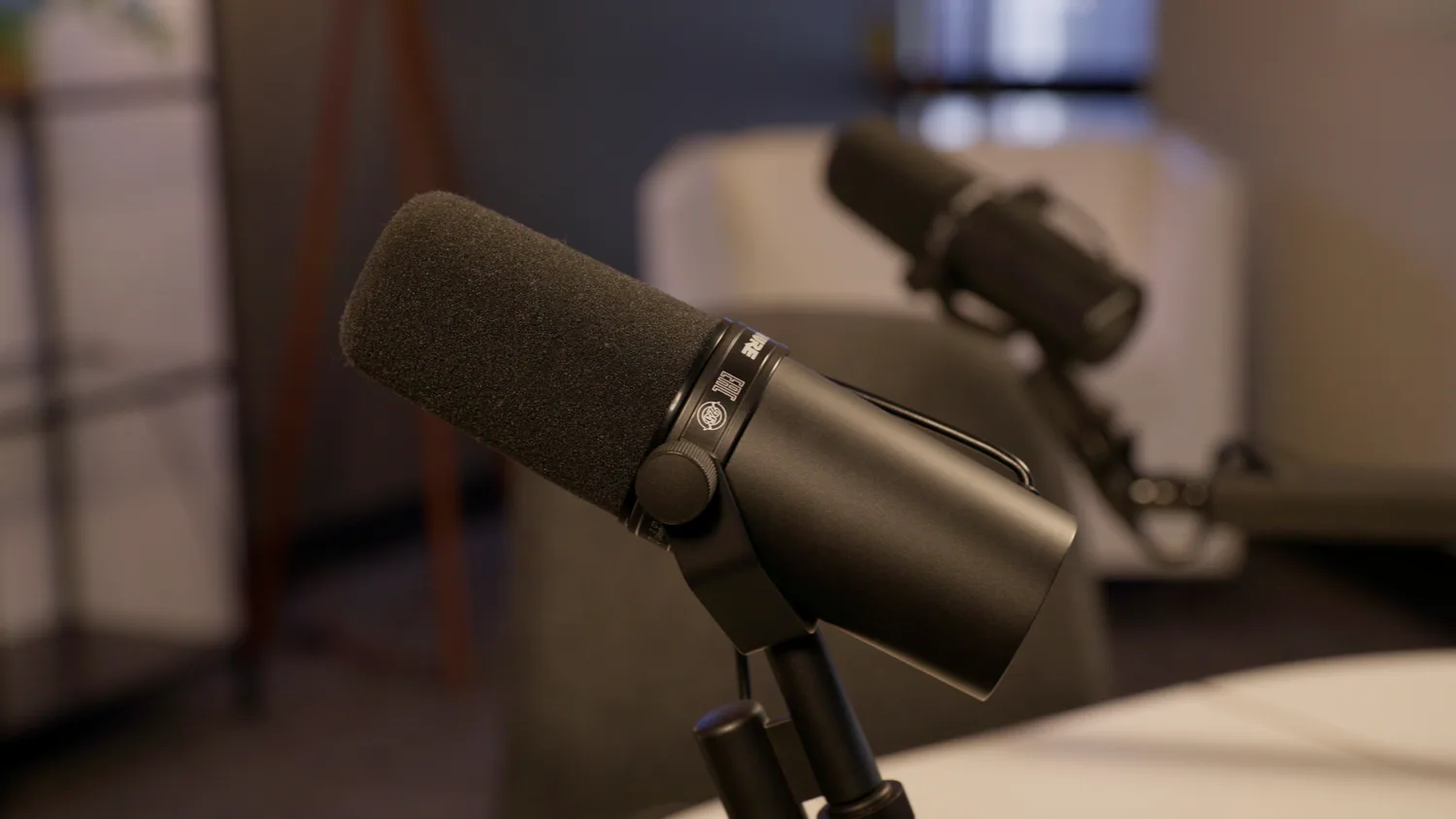
A studio also gives you things you can't easily get at home. Podcast audio is the big one. If the sound matters more than the picture, a room tuned for it with proper mics is worth the trip. The same goes for anything where you want a clean, controlled look: webinar-style videos, FAQ and training content where you're reading off a teleprompter, explainers, product demos. We keep the gear for all of that on hand. Green screen and white backdrop work is studio territory too, and if you want vertical, TikTok-style clips, both sides of our space handle that well.
Here's the simple way to decide. If the value of the content is in feeling authentic and close to the customer, home often wins. If the value is in looking polished, controlled, or on-brand, or if the audio has to be clean, the studio earns it. A B2C testimonial might lean home while a B2B one leans studio, so even within one format it comes back to the audience. Webinars, training, FAQ videos, and podcasts lean studio.
Plenty of shows run both. The host records the anchor episodes in the studio, where the audio and the look stay consistent, and remote guests join on webcam from wherever they are. Nobody holds the mismatch against you. If anything, the guest on their own webcam reads as the real outside voice, which is what you wanted from them in the first place.
These days both are completely acceptable. Audiences don't hold a webcam against you the way they might have a few years ago, and they don't assume a studio means you're hiding something. So you're not picking the right way to record. You're picking the one the person on the other end will trust more. Figure out who that is first, and the choice usually makes itself.
If you're not sure which fits your content, we can talk it through, and we can do either.