A good testimonial sounds like the customer just talking. A bad one sounds like they're reading. The difference isn't whether you prepared, it's what you prepared and how you run the room. The most natural-sounding testimonials are usually the most planned.
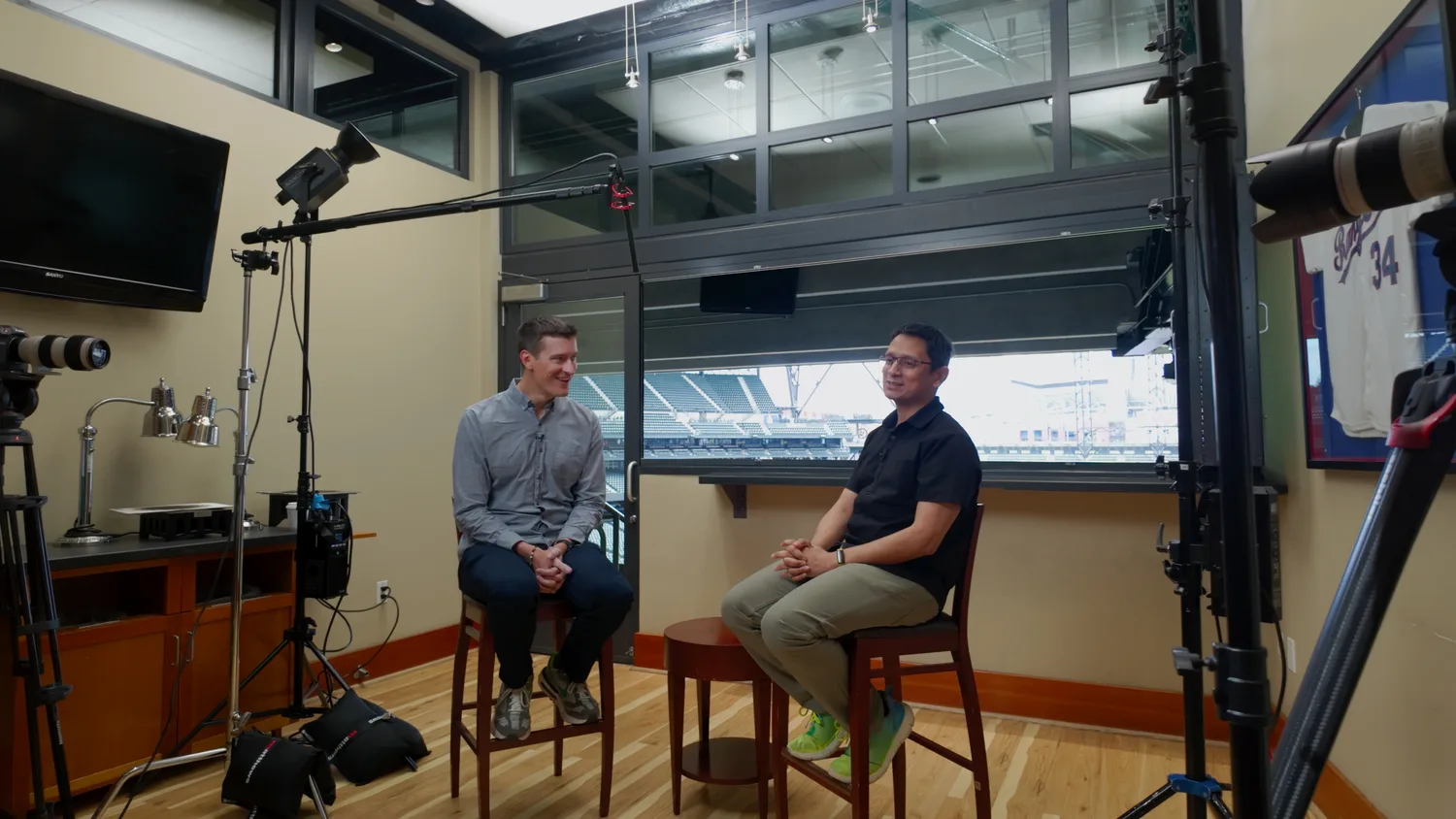
Start with the crew. We keep it small, usually two or three people. A testimonial is not the shoot where you want a big crew crowding someone who isn't used to being on camera. The smaller the footprint, the faster the person relaxes, and a relaxed person gives you something real. We'll often shoot in their own space for the same reason, and we spend a little time with them before the camera comes out.
Most of the work happens before we show up. We sit down with you and figure out what this customer is in a position to say. What are they happy about? What problem did you solve for them? Who is the video for? That last one matters more than people expect. We look at your customer personas, and often a single customer can speak to two or three of them. So we shape the questions around the answers each of those personas needs to hear. We're not handing the customer a script. We're preparing questions that give them room to tell their own story while staying on the things that are useful to you.
Sometimes we send those questions over ahead of time, especially for senior people who like to think before they talk. Then on the day, we put them somewhere they're comfortable. If they're a woodworker, that's at the lathe. If they're a brewer, it's in front of the roaster. People talk better in their own environment than parked on a stool under a light, so that's where we put them, with lighting that looks good without feeling staged.
The interview itself goes in a deliberate order. We start with easy questions, softballs, just to get them talking and into a rhythm. Once they've settled in, we move to the ones that matter. As they answer, we guide. If they say the right thing but bury it in the middle of a long, rambling answer, we'll ask it a different way so they land it cleanly. We're not putting words in anyone's mouth. We're helping them say the thing they already believe in a way that works on camera, because almost nobody naturally speaks in clean, usable soundbites on the first try.
This is also why preparation beats a script. A script makes people read, and reading always shows. Good questions do the opposite. They give the person something true to react to, and the answer comes out in their own words, which is the entire point of a testimonial. Nobody trusts a customer who sounds like they're reciting.
That's the whole approach. Small crew, real preparation, a comfortable setting, and questions built around what your customers need to hear. Do that and the result sounds unscripted, because in the ways that matter, it is. The words are theirs. The preparation just made sure they got to say them well.