
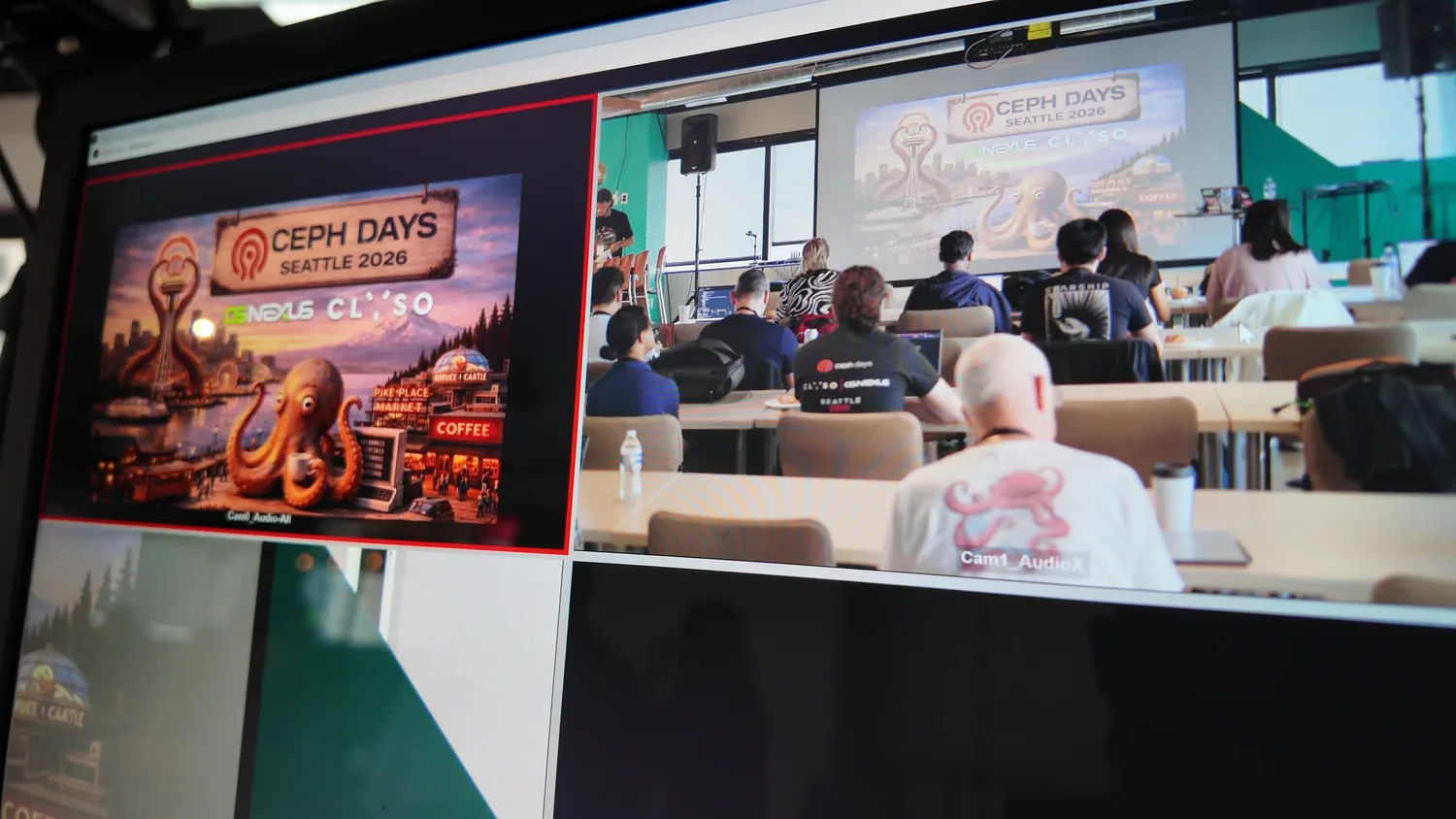
Nothing ever goes completely right in a live stream. Something always comes up. That's not pessimism, it's just the nature of the format. When you produce video the normal way, you fix problems after the fact. A flubbed line, a missed focus, a bad angle, you reset and go again. In film, take 42 isn't unusual, because they keep going until it's right.
A live stream doesn't give you that. A live stream is editing in real time, on the first try, in front of everyone. You can cut to the wrong camera. A camera can run out of battery. An angle can be off, or you can miss focus on a speaker, and there's no second take. Every choice you'd normally get to redo, you're making once, live.
So the job isn't avoiding mistakes entirely. It's building the production so the mistakes that do happen never reach the audience. That comes down to redundancy and planning.
Here's a real one. A few years back we were running a live stream at an event, several hours long, and we knew going in that the connectivity in the building wasn't good. So we built failover into the setup. Two LTE hotspots, in sequence. If we lost the building's wifi, it would switch to the first hotspot. If that one failed, it would switch to the second. The stream wasn't supposed to be able to drop.
Partway through, it dropped. The router got unplugged, or something on the building's side gave out, and we lost internet completely. For a second the stream froze. Then the first hotspot caught it and we kept going. The feed online never cut. The people watching saw a brief pause and nothing else. The mistake happened, it just never made it to them, because there was a backup waiting under the backup.
We also record locally the whole time we're streaming. So even in the worst case, where the connection drops longer than the failover can cover, there's still a clean copy of everything on a drive in the room. You can always post the recording. You can't un-air a stream that died on screen.
The other half is the part nobody sees: testing. We walk the room ahead of time, find the weak points, and run the whole chain before anyone is watching. Most live-stream disasters aren't bad luck. They're a thing nobody checked.
That's the whole lesson. If you're streaming a conference, the question isn't whether something will go wrong, it's what happens when it does. Have backup internet, not just good internet. Have backup power. Have a plan for a dead camera. Find the weak points before they find you.
It costs a little more to do it this way, and that's the honest part. Redundancy means more gear and more setup. But a live stream is high stakes by definition, because you only get the one shot, and the difference between a stream that survives a problem and one that doesn't is the planning you did before anyone hit go.